Skip to main content
Are Refurbished Laptops Worth It?
5/14/2026
When a new laptop feels out of reach, a refurbished one can look like a smart compromise. Lower price, familiar brands, functional tech — what's not to like? The answer isn't so simple. Whether a refurbished laptop is the right call depends on several factors, including what you need the device to do, how long you need it to last, and the trade-offs you're comfortable making. Here's a closer look at what refurbished really means, where it works well, and where it might leave you wanting more.
What Is a Refurbished Laptop?
A refurbished laptop is a previously owned or returned device that has been inspected, repaired if necessary, and resold, usually at a reduced price. The term "refurbished" covers a wide range, though. Some refurbished laptops come directly from manufacturers, fully tested and restored to like-new condition, and sometimes include a limited warranty. Others are sold by third-party resellers with less rigorous standards and little to no shopper protection.
Because the refurbishment process can vary, quality may differ depending on who performed the repairs and what standards were used. A manufacturer-certified refurbished laptop is a very different product from one sold "as-is" through an unofficial channel.
In short, the source and certification level of the device are often just as important as the price tag.
Pros of Choosing a Refurbished Laptop
Refurbished laptops can be seen as an easier entry into the computer space than their newer counterparts, sometimes offering mid-range or higher-end specs with a lower retail price.
Refurbished laptops tend to make the most sense when:
- You primarily need a device for browsing, word processing, or video calls
- You're a student or casual user with straightforward needs
- You need something functional in the short term
- Sustainability matters to you. Choosing refurbished helps keep functional devices in use longer and may reduce electronic waste
- You have a tight budget and need something functional right now, in which case a certified refurbished laptop from a reputable source can be a practical solution
Cons of Choosing a Refurbished Laptop
Even though refurbished laptops can be practical, there are some tradeoffs to keep in mind.
Battery Longevity Concerns
Laptop batteries degrade over time, and a refurbished device may hold significantly less charge than it once did — something that isn't always disclosed upfront.
Software Compatibility Issues
Refurbished laptops are often older models, which means they may not support the latest software updates for as long as a new device would. If you need the laptop to last several years, you might hit hardware limitations sooner than expected.
Limited Warranty Coverage
Warranty coverage may also differ compared to new devices. Some refurbished laptops include limited warranties, while others may offer shorter coverage periods or fewer protections.
Varying Refurbishment Quality
Not all refurbished laptops go through the same process before hitting the shelf. A device refurbished directly by the manufacturer is generally held to stricter standards, while third-party refurbishes can range from highly professional operations to more informal setups with limited quality control. This inconsistency makes it harder to know exactly what you're getting.
If you rely on your laptop daily for work, school, or creative projects, these gaps are worth weighing carefully against the upfront savings.
What to Look for When Choosing a Refurbished Laptop
If you do decide a refurbished laptop is the right fit, being selective about where and how you shop can make a significant difference. Not all refurbished devices are created equal, so it pays to do a little homework before committing.
- Manufacturer-certified refurbishment (not just third-party)
- A clear return or warranty policy
- Transparent disclosure of battery health and any replaced parts
- Seller reputation and verified customer reviews
Refurbished Laptop vs. New Laptop: What to Consider
There's a lot to weigh when deciding between a refurbished and a new laptop. Price is one piece of the puzzle, but factors like warranty coverage, hardware age, and how long the device will stay supported all play a role in determining which option delivers the most value for your situation.
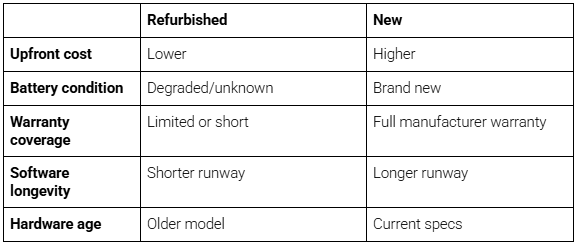
A refurbished laptop may cost less today, but if it needs to be replaced sooner — or if performance issues slow you down along the way — the overall value starts to shift. That doesn't make refurbished a bad choice across the board, but it does mean the true cost comparison is more nuanced than sticker price alone.
The better question isn't "are refurbished laptops worth it?" but rather, "what do I actually need from this device, and for how long?" A refurbished laptop may be a reasonable fit for light, short-term use. For heavier workloads or longer-term needs, a new device may serve you better over time.
Consider Lease-to-Own Instead of Refurbished Options
If budget limitations are influencing your decision, refurbished devices are not the only path to consider.
Some shoppers explore computers available through lease-to-own at participating retailers, which may offer access to newer technology through an alternative option to traditional financing. Lease-to-own can be helpful when reliable performance is important for work, education, or everyday tasks and you want another way to obtain the technology you need.
Lease-to-Own a New Laptop Through Acima Leasing
So, should you get a refurbished laptop? For some shoppers, refurbished devices offer a practical solution that supports basic computing needs. For others, choosing a newer model may provide added confidence in long-term performance.
If you're considering refurbished because your options feel limited, Acima Leasing offers another path to consider. Instead of compromising, you can lease-to-own a new laptop through participating retailers and be on the path to ownership by making easy optional lease renewal payments. To explore what’s available, find an Acima partner near you, shop online, or get started in the Acima app today.