Skip to main content
Prescription Sunglasses vs. Transition Lenses Explained
6/8/2026
Choosing new eyewear isn’t always as simple as picking a frame you like. Once you start exploring your options, one question tends to come up quickly: Should I get prescription sunglasses or transition lenses?
Both options are designed to improve your vision while helping you manage bright sunlight, but how they perform and fit into your everyday routine can feel very different. The best choice usually boils down to how you spend your time and what level of convenience you want.
What Are Prescription Sunglasses?
Prescription sunglasses are made with the same prescription as your everyday glasses, but they have tinted lenses that reduce brightness and help protect your eyes from the sun.
What sets them apart is their consistency. The moment you step outside and put them on, they’re already optimized for bright conditions, with no delay or adjustment period. That reliability can make a noticeable difference, especially if you spend extended time outdoors.
Prescription sunglasses can be especially helpful in situations like:
- Driving in bright sunlight, where glare can impact visibility
- Spending long periods outdoors, from errands to travel
- Being around reflective surfaces like water or pavement
Another big draw is style. Prescription sunglasses often come in a wide variety of frames and lens options, giving you more freedom to choose something that feels like both a functional and personal upgrade.
Considering sunglasses, but need help picking a style? Our guide on choosing the right pair of sunglasses can help you decide.
What Are Transition Lenses?
Transition lenses are designed to adapt throughout your day. Indoors, they work like your regular clear lenses. When exposed to sunlight, they gradually darken, functioning as sunglasses. They lighten back to clear once you’re inside again.
The main appeal of transition lenses is the convenience. Instead of managing multiple pairs of glasses, you have one pair that adjusts to your environment. Over time, that simplicity can make a big difference in how effortless your routine feels.
They tend to work best for people whose days involve:
- Moving frequently between indoor and outdoor spaces
- Commuting or running errands throughout the day
- Wanting a low-maintenance, all-in-one solution
While they’re versatile, they’re designed for balance. That means they may not always reach the same level of darkness or glare reduction as prescription sunglasses in certain conditions.
Prescription Sunglasses vs. Transition Lenses: What’s the Difference?
When comparing prescription sunglasses and transition lenses, the differences come down to performance versus convenience.
Prescription sunglasses are built specifically for outdoor use, which allows them to provide:
- Stronger glare reduction
- A consistent level of tint in bright sunlight
- Reliable performance in high-light environments
Transition lenses focus on adaptability. Their benefits include:
- Automatic adjustment between light conditions
- One pair for both indoor and outdoor use
- Less need to carry or switch glasses
In simple terms, prescription sunglasses are more specialized, while transition lenses are more flexible. The right choice depends on which of those matters more in your daily life.
Should You Get Prescription Sunglasses or Transition Lenses?
When comparing transition lenses and prescription sunglasses, it can help to think more about your lifestyle than the glasses' features. Both options can be great, but one may fit your daily routine slightly better than the other.
If you want consistent performance and a dedicated outdoor solution, prescription sunglasses may be the way to go. If you value simplicity and an all-in-one approach, transition lenses can make daily life easier.
And if your routine calls for a mix of both, you don’t necessarily have to choose just one. It’s not uncommon to use transition lenses for everyday wear and keep prescription sunglasses for times when extra sun protection really matters, like while driving or during outdoor activities.
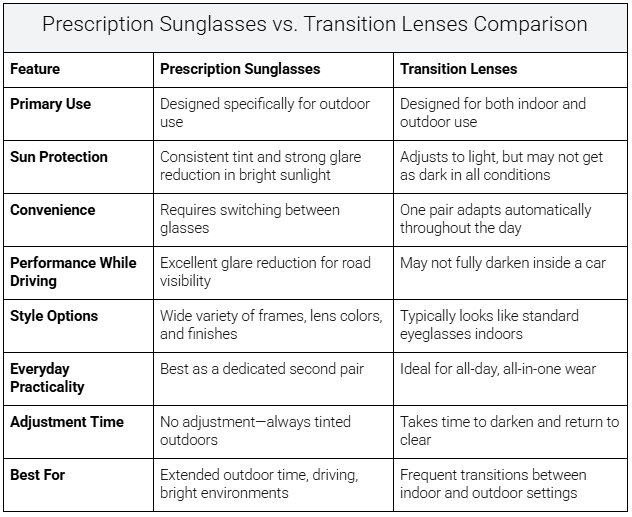
Here’s a quick-reference comparison charge based on information from Blake Bush Family Eye Care:
Acima Leasing Can Help Make the Upgrade Feel More Manageable
Once you’ve decided what fits your lifestyle, there’s still the question of getting your new pair. Eyewear upgrades, especially when you’re considering multiple options, can add up quickly. Prescription sunglasses, in particular, can come with a higher price tag depending on the lenses and frames you choose.
Acima Leasing helps make eyewear upgrades more accessible by letting you get the glasses you need today and make optional lease renewal payments. When you're ready to choose what works best for you, you can explore options through the Acima Marketplace or find a partnering retailer near you.